 30 Days FREE Trial on Every Registration
  Contact Us
 info@menurepo.com


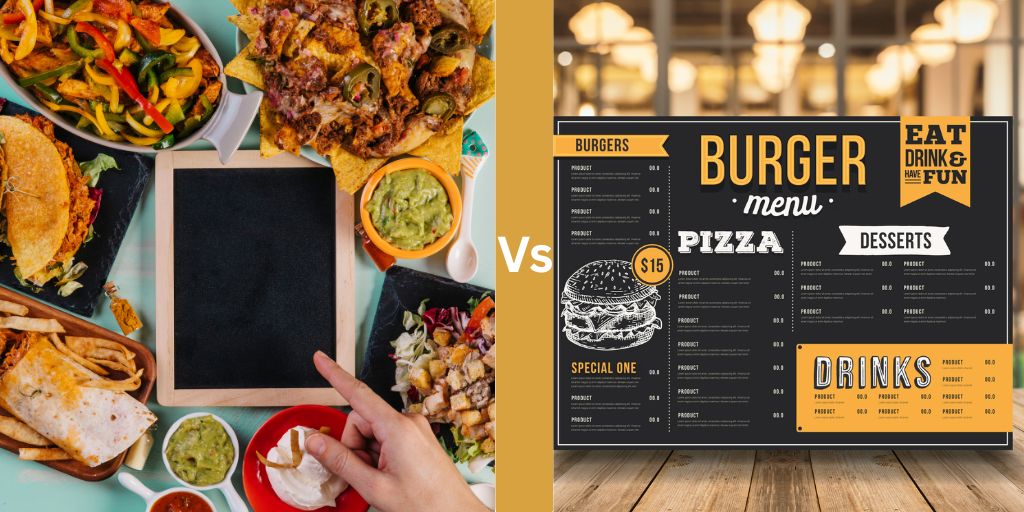
Summary: This article compared digital menu boards and traditional printed menus, highlighting differences in design, updates, cost, and conversion power. Digital menus deliver higher engagement and better results for restaurants.
Restaurants today are re-evaluating how they present their menus. With the rise of digital technology, many restaurants are moving from printed menus to digital menu boards. The question is: digital menu board vs traditional menu — which one converts best? In this blog, we break down the major differences, compare advantages, and explain which option leads to higher customer engagement and sales.
What Is a Traditional Menu?
A traditional menu refers to printed, static menu cards made from paper or laminated material. They are widely used across restaurants but come with challenges like reprinting costs, menu inconsistencies, and limited design flexibility.
What Is a Digital Menu Board?
A digital menu board is an electronic display that shows dynamic menu content using TV screens or digital signage. Restaurants can update items, images, and prices instantly, making it a smart and efficient way of showcasing food options.
Digital Menu Board vs Traditional Menu – Key Differences
1. Visual Appeal
Digital Menu Boards:
- Bright visuals, videos, and animations
- High-quality images increase customer appetite
- Modern, attractive, engaging
Traditional Menus:
- Limited by print quality
- No motion or animation
- Can look outdated over time
2. Flexibility & Updates
Digital Menus:
- Update prices instantly
- Add daily specials
- Switch between breakfast/lunch/dinner menus
Traditional Menus:
- Reprinting required for every update
- Limited space
- Harder to align design with branding
3. Conversion Power
Digital menu boards consistently drive higher conversions because:
- Customers spend more time viewing screens
- Visuals trigger impulse orders
- Promotions are more noticeable
- Upsells are easier to highlight
Restaurants using digital menus often see conversion increases of 15–30%.
4. Cost Comparison
Digital Menus:
- Higher initial setup
- Lower long-term cost
- No reprints needed
Traditional Menus:
- Lower upfront cost
- Higher long-term printing costs
- Wear and tear requires replacement
Which Menu Type Converts Best?
Digital menu boards clearly outperform traditional menus in conversions due to better visuals, dynamic content, flexibility, and strong promotional capabilities. Traditional menus still work well for dine-in experiences, but digital menus dominate when the goal is increased sales and customer engagement.
Conclusion
When comparing digital menu board vs traditional menu, digital menus win for conversion, flexibility, and design impact. Restaurants looking to modernize operations and improve sales should consider switching to digital menu board solutions.
